
Vietnam, Ten Years On: What Changed and What Didn't
· Updated · BootsnAll
We wrote a piece called "Vietnam, Ten Years On: What Changed and What Didn't". It made the case that the country was extraordinary value, culturally rich, historically heavy and an adventure to move around in, and that you could travel there on about 30 dollars a day.
Ten years on, that page is worth keeping only if we say what has actually changed. So here it is.
What changed
Getting in got much easier. In 2016 the visa was the first obstacle in any Vietnam plan. Now the e-visa is open to every nationality, runs up to 90 days, single or multiple entry, and costs 25 or 50 dollars from evisa.gov.vn. More than thirty nationalities skip it entirely with 30 or 45 days visa free. This is the single biggest improvement for travellers in the last decade.
The roads. Expressways have rewritten the northern itineraries. Hanoi to Sapa used to be a ten hour mountain road, which is why everyone took the night train; it is now five and a half hours by van and the bus is the faster option. Hanoi to Halong went from about four hours to two and a half.
Da Nang happened. In 2016 Da Nang was a place you passed through to reach Hoi An. It is now a city in its own right, with a beach strip, an international airport and a large population of remote workers.
Three years missing. Vietnam closed to visitors in 2020 and did not fully reopen until March 2022. A lot of small operators did not survive that, and a lot of the businesses you will read about in older guides no longer exist.
The prices. Thirty dollars a day was accurate in 2016. It is not now. Budget for something closer to 40 or 50 for the same style of travel, more in Saigon and Hanoi. Vietnam is still excellent value. It is no longer startling value.
What did not change
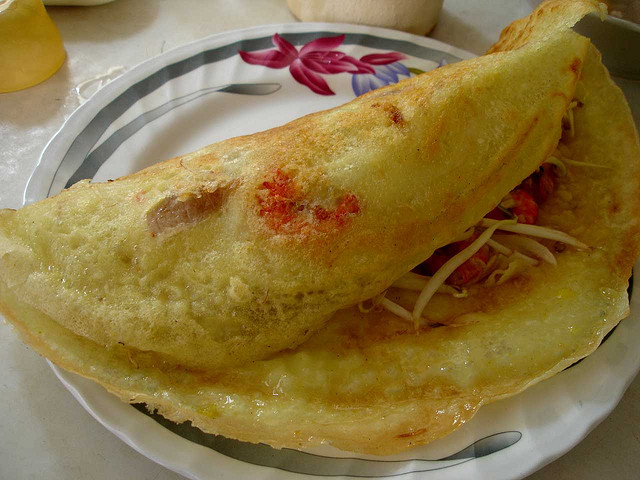
The food. Still the best argument for the country, still eaten on a plastic stool on a pavement, still costing a couple of dollars. Pho in Hanoi, bun bo in Hue, banh mi anywhere, and coffee strong enough to stand a spoon in.
The coast. Three thousand kilometres of it, and outside the developed stretches most of it is still empty.
The train. The Reunification Express still takes 32 to 35 hours end to end and still runs five times a day. A high-speed north-south line has been approved and is a project for the 2030s and beyond. For now the railway is what it was, which is slow, cheap and one of the best things you can do in the country.
Hoi An tailoring. Still there, still fast, still cheap by any standard outside Asia.
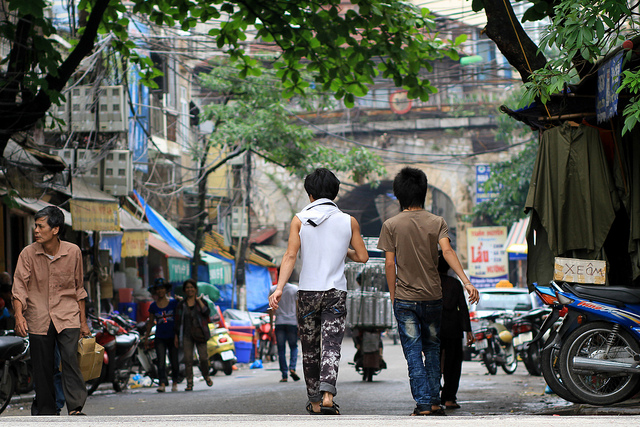
The traffic. Still the thing that will define your first day. The technique for crossing a road in Hanoi has not changed: walk at a steady pace, do not stop, do not run, and let the motorbikes go around you.
What got worse
Overtourism is real in specific places. Halong Bay, Hoi An's old town and Sapa town all feel the weight of it now in a way they did not a decade ago, and the answer in each case is the same: go slightly further. Lan Ha Bay instead of Halong. The villages outside Sapa rather than the town. Hoi An at seven in the morning rather than seven at night.
Air quality in the two big cities has not improved.
So is it worth the trip
Yes, and more easily than in 2016. The visa is sorted, the roads are better, the flights are cheap and the food has not changed. What you have lost is the sense of it being slightly difficult, which some people were paying for without knowing it.