
Vietnam in August
· Updated · BootsnAll
 The first thing to understand about Vietnam's weather is that there is no such thing as Vietnam's weather. The country runs 1,700 km north to south and has three distinct climates, and in August they are doing three different things.
This is the month that catches people out, because a single trip up the coast in August can go from monsoon to sunshine to typhoon warning.
The north: hot, wet and heavy
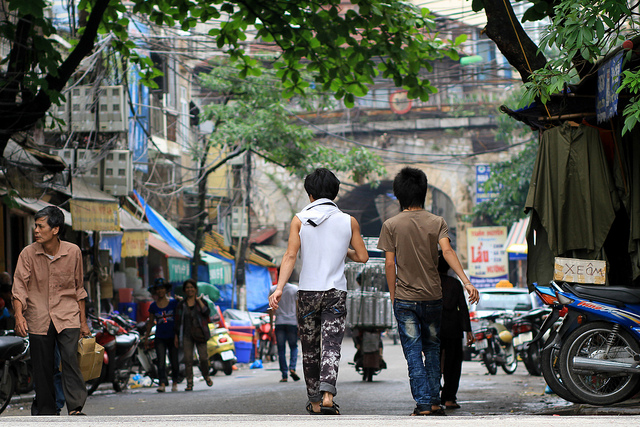
Hanoi in August is the hottest and wettest it gets. Daytime temperatures in the low thirties, humidity that makes it feel considerably worse, and this is peak rainy season with heavy afternoon downpours.
The rain usually comes in bursts rather than all day, so it is workable if you plan around the afternoons. What is less workable is Sapa and the northern mountains, where August rain brings landslides that close roads with little notice.
The compensation: the rice terraces around Sapa are green and full, and the harvest gold arrives in September and October.
The centre: this is typhoon country
Hue, Da Nang and Hoi An are at their hottest and driest in the early summer, and August sits at the turn. It can be superb, with high thirties and sunshine and warm sea.
It can also be the start of the storm season. Typhoons affect the central coast from roughly July through October, with the worst usually in September and October. An August typhoon is not the most likely outcome, but it is a real one, and it closes Halong Bay cruises and grounds flights when it happens.
Watch the forecast in the week before you travel and keep your itinerary loose on this stretch.
The south: wet season, and fine anyway
Ho Chi Minh City and the Mekong Delta are in the wet season, which sounds worse than it is. The pattern is a hot morning, a heavy downpour in the afternoon lasting an hour or two, and then a clear evening.
Temperatures sit around 30 to 32 and vary very little all year. The delta is at its fullest and greenest now, and the countryside looks better than it does in the dry months.
Take an umbrella and plan indoor things for mid-afternoon and the south in August is perfectly good.
Crowds and prices
August is high season for domestic Vietnamese tourism and for European visitors on summer holidays, so the beach towns, Nha Trang, Da Nang, Phu Quoc, are busy and priced accordingly.
It is simultaneously low season for foreign visitors overall, because the weather has a bad reputation. That combination means cheap flights and full beach resorts at the same time, which is worth knowing when you book.
What to pack
Light clothes that dry fast, a real rain jacket rather than a poncho if you are going north, and something warmer only if you are heading into the mountains, where it can be cool at altitude even in August. Sandals you do not mind soaking.