Round The World via Europe
· Updated · BootsnAll
 Most round the world routes treat Europe as the expensive bit to get through quickly on the way to Asia. That is a reasonable instinct about western Europe and a bad one about the rest of it, and Croatia is the clearest example of why.
How Europe fits a round the world ticket
A multi-stop or round the world fare is priced on the shape of the route rather than on individual flights, so the question is not "what does a flight to Croatia cost" but "does adding this stop change the fare".
Usually it does not change it much. Europe sits between the Americas and Asia on a westbound or eastbound circuit, and most tickets pass through it anyway. A stop in the region is often close to free in fare terms, which is not true of adding a detour to, say, the Pacific.
What costs money in Europe is the time on the ground, not the flight. Which is exactly why where you stop matters.
Why Croatia earns the stop
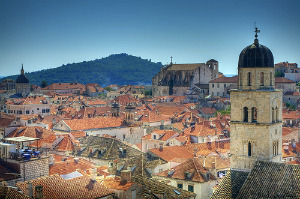
If you are on a long trip watching a budget, Croatia does something useful: it gives you a proper European experience without western European prices, and it does it on a coastline most of your friends will never see.
Specifically:
It is cheaper than the west. Not cheap any more, and noticeably less than Italy or France for food, accommodation and transport, especially outside July and August.
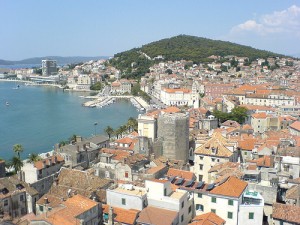
The overland links are good. Croatia sits where western Europe, central Europe and the Balkans meet. From Zagreb you can be in Ljubljana, Budapest, Vienna, Belgrade or Sarajevo by bus or train without flying. From Dubrovnik you are a short hop from Montenegro. From Split there are overnight ferries to Italy, which means you can leave the country by sea and pick your trip up in Ancona or Bari.
That connectivity is the real argument. A round the world ticket gives you a fixed number of flights; a country with good land borders lets you see four more countries without spending one.
The friction is gone. Croatia joined Schengen and adopted the euro on 1 January 2023, so there is no border control arriving from most of Europe and no currency to change. The Pelješac Bridge, opened July 2022, removed the Bosnian crossing from the Split to Dubrovnik road.
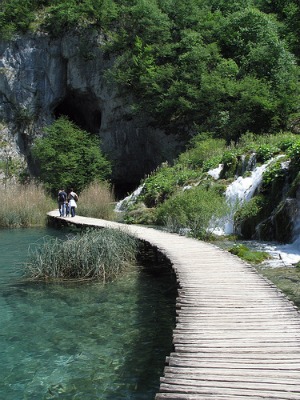
It rewards slow travel. The islands are best done over weeks rather than days, and a long trip is the one kind of trip that has weeks. Ferry hopping down the Dalmatian chain from Zadar to Dubrovnik is one of the better slow journeys in Europe and costs very little.
Where to fly into
Zagreb has the most year-round service and is the best bet on a multi-stop ticket. Split and Dubrovnik have enormous summer schedules from all over Europe and much reduced ones from November to March, so a coastal arrival that works in July may not exist in February.
A common shape: fly into Zagreb, work down the coast by bus and ferry over two or three weeks, and leave by ferry to Italy or by air from Dubrovnik.
The rest of Europe on a long trip
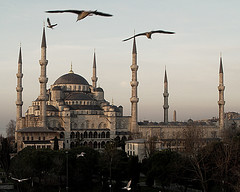
The same logic applies more widely. Istanbul is a superb round the world stop and a cheap one. So are Poland, Romania and the Baltic states. Western Europe will eat your budget faster than anywhere else on the circuit except Japan and Australia.
If Europe is a leg rather than the destination, weight it east and south. You will stay longer for the same money.