Reasons you should be in Croatia right now
· Updated · BootsnAll
 Croatia spent the 2000s as the coming thing, and the two questions people asked were whether it was safe and whether it was cheap. The answers were yes and very. Only one of those is still true, and the case for going is stronger anyway.
Because it finished the war
On 1 March 2026 Croatia was declared free of landmine-suspected areas, thirty-one years after the fighting ended. The Mine Action Centre cleared 1,807 square kilometres and removed more than 410,000 explosive devices along the way.
That is the last practical trace of the 1990s to be dealt with, and it means the interior is genuinely open. The parts of Croatia that visitors avoided for a generation are now just countryside.
Because the plumbing works now
Three changes in four years have quietly made this a much easier country to travel in.
Croatia joined the Schengen area on 1 January 2023, so arriving from another Schengen country involves no border control at all. It adopted the euro the same day, which ended the business of changing money and working out kuna in your head. And the Pelješac Bridge opened in July 2022, joining southern Dalmatia to the rest of the country by road so that the drive from Split to Dubrovnik no longer crosses into Bosnia and back.
None of these are exciting. Together they remove most of the friction that used to come with a Croatian trip.
Because of the coast, still
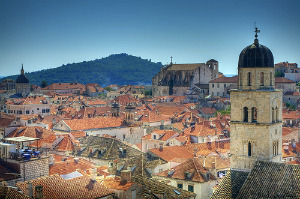
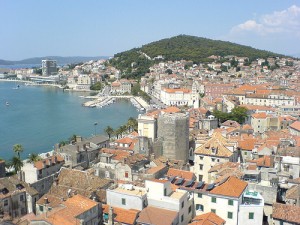
A thousand-odd islands, water clear enough to see the bottom at twenty metres, and Roman and Venetian towns stacked along the shore. Diocletian's palace in Split is a Roman emperor's retirement home that a city moved into and never left. Dubrovnik's walls are the best preserved in Europe.
The coast is the reason most people come and it has not got any less good.
Because you can still avoid the crowds, if you try
Here is the honest part. Croatia in July and August is now very busy, Dubrovnik and Hvar in particular, and the cheap country of 2007 is gone: prices are broadly European now.
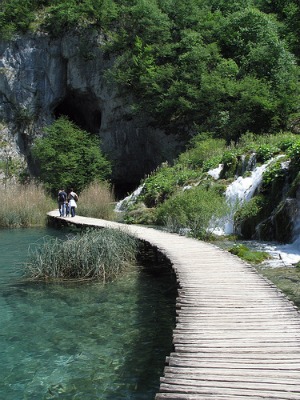
But the crowding is concentrated to an almost comical degree. Go in June or September and the same places are manageable. Go to Vis, Lastovo, Cres or the Kornati rather than Hvar, and you will have water to yourself. Go inland at all, to Plitvice at dawn, to the Lika highlands, to the Slavonian wine country at Ilok, and you will be nearly alone.
The rule in Croatia now is the same as in Italy: everyone goes to five places, and the country has five hundred.
Because of the shoulder season
If we were giving one piece of advice it is this. May, June, September and early October on the Adriatic are close to perfect: warm enough to swim, flights still running, restaurants open, and a fraction of the August load.
August is for people whose holidays are fixed by school terms. If yours are not, do not go in August.