Getting to Libya
· Updated · BootsnAll
Where this stands in 2026. Two things are true at once, and most writing about Libya gives you only one of them. Libya is open to organised tourism: there is a working government e-visa, licensed Libyan operators run trips, and people go. It is not open to independent travel, and Western governments still advise against all travel to the country. The United States renewed its Level 4 "Do Not Travel" warning on 31 August 2026 and the British, Canadian and Australian advisories sit at their highest level. There is no US embassy operating in Libya; consular work is handled from Tunis. Both halves are true, and you need both to decide.
You fly, and you fly via Istanbul, Tunis or Cairo
Almost every visitor arrives by air, and the routing is shaped by one fact: you cannot fly to Libya from the European Union. Libyan carriers are on the EU air safety list and banned from operating into the bloc, and EASA has a separate airspace warning over Libya that has been extended to January 2027.
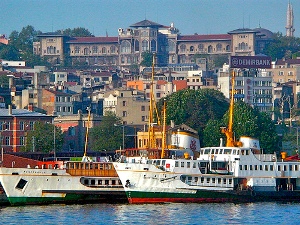
So the route in is through a hub outside the EU. Istanbul is the main one, with Turkish Airlines serving Mitiga in Tripoli, Benina in Benghazi and Misrata and expanding its schedule. Tunis, Cairo, Amman and Dubai are the other usual connections.
Tripoli's traffic uses Mitiga rather than the old international airport, which was wrecked in the fighting. Benina serves Benghazi and the east.
Your operator meets you
Because entry requires sponsorship by a licensed Libyan tour company, you will not be arriving alone and working it out at the desk. The operator's representative meets the flight, and the paperwork behind your e-visa is theirs.
That is not a formality to be negotiated around. Solo arrival is not a thing here.
Land borders
They exist and they are used. Ras Ajdir, the crossing from Tunisia, is the well-travelled one, and Amsaad, on the Egyptian side near Salloum, is operational and sees overlanders.
What you should not do is treat either as a route you arrange yourself. The entry permission is what matters, not the geography, and that comes through your operator. If you want to enter overland, raise it with them at the booking stage and let them tell you whether it works for your nationality and your dates. Sources online disagree with each other about the current position, which is a good reason to rely on the company carrying the clearance rather than on a travel page.
Which half of the country
Libya has two rival administrations and this affects how a trip is put together.
The western circuit, out of Tripoli, covers Leptis Magna, Sabratha and Ghadames, and is the standard trip. The eastern circuit, out of Benghazi, covers Cyrene and Apollonia, and needs a separate clearance costing around 600 US dollars a head plus a tourist police escort.
Combining both in one trip is possible and adds cost and paperwork. Most first visits pick one.
The southwest
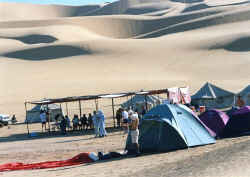
Ghadames, the Tadrart Acacus rock art and the Ubari lakes are the desert half of what Libya has, and they are a long way from the coast. Trips there are longer, more expensive and more logistically involved, and the security picture in the south differs from the coast.
That is a conversation to have with an operator rather than a decision to make from a map.
Before you commit
Read your own government's current advice properly rather than skimming it, because it determines whether your insurance is worth anything. Buy specialist high-risk cover with medical evacuation. And understand that with no embassy in the country, help if things go wrong is limited to what your operator can provide.
People weigh that up and go, and come back having had the Roman cities of North Africa almost to themselves. It is a decision worth making with the real numbers in front of you.