Getting from Split to Zadar
· Updated · BootsnAll
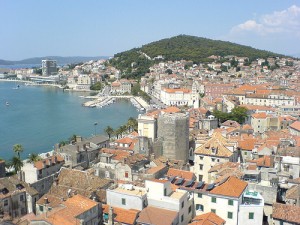
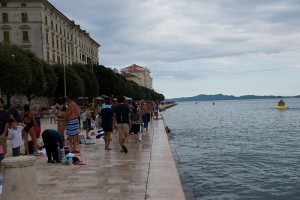 Split is built around Diocletian's palace, a Roman emperor's retirement complex that the city simply moved into and never moved out of. Zadar is 160 km north, older still, and has the two things everyone comes for: the Sea Organ, which plays as the waves push air through pipes under the promenade, and the Greeting to the Sun beside it.
Alfred Hitchcock said Zadar had the best sunset in the world, which the city has been repeating ever since and which is not far wrong.
Buses
The bus is the answer here. Journey time is roughly two and a half to three and a half hours depending on whether the service runs the motorway or the coast road, and there are departures through the day, more in summer.
The A1 motorway is the fast version and runs inland. The old coast road, the Magistrala, takes longer and is much more scenic. If you have the choice and the time, take the slow one.
Both bus stations are central. Split's sits next to the ferry port and the railway station, a few minutes' walk from the palace. Zadar's is about fifteen minutes from the old town on foot.
Trains, which are not the answer
There is a railway, and it is slower than the bus and less frequent. Croatian rail does not serve the coast well, which is a consequence of the geography: the mountains come down close to the sea and the line has to work around them.
Buses do the intercity work in this country. That is not a criticism of the trains so much as a description of how Croatia is organised.
Driving
About an hour and three quarters on the A1, which is tolled and well built. The coast road is closer to three hours and is the better drive.
A car earns its keep on this stretch because of what is between the two cities. Krka National Park, with waterfalls you used to be able to swim beneath, is just off the motorway near Sibenik. Sibenik itself has a cathedral built entirely of stone without mortar, a UNESCO site, and far fewer visitors than it deserves. The Kornati islands are reached from Murter.
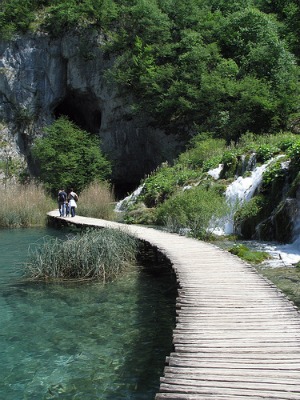
Plitvice Lakes is the other obvious detour, inland and about two hours from either city.
Boats
There is no quick direct passenger service between Split and Zadar. The ferry network here is built to serve the islands rather than to run along the coast, so getting between the two by sea means island hopping and it takes a great deal longer than the bus.
Worth doing as a holiday, not as a transfer.
Practical notes
Croatia joined the Schengen area and adopted the euro on 1 January 2023, so there are no internal border checks arriving from other Schengen countries and the kuna no longer exists.
Summer on this coast is busy in a way that is hard to overstate. Buses, ferries and accommodation all need booking ahead in July and August, and the coast road becomes slow.