Getting from Gothenburg to Stockholm
· Updated · BootsnAll
 Gothenburg is Sweden's second city, a university town on the west coast with a working harbour, a good museum or two and an archipelago on its doorstep. Stockholm is the capital, spread over fourteen islands, and is where most trips to Sweden begin or end.
They are about 400 km apart, coast to coast, and this is the busiest intercity route in the country. It is also one of the few in Europe where you have a real choice of train operator, which is good news for the fare.
Trains, and which company
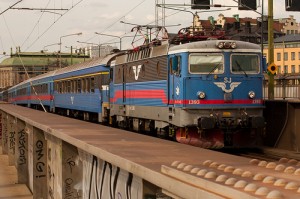
SJ is the national operator and its X2000 does the run in about three hours and five minutes. That is the fast option and it is a genuinely comfortable train.
VR, which ran here as MTRX until the Finnish state operator rebranded it, competes on the same route with several departures a day. Its trains are a little slower and frequently cheaper. On a three hour journey, twenty minutes for a materially lower fare is usually the right trade.
Check both before booking. They do not sell each other's tickets, so a single search on one company's site is only half the picture, and this is the one route in Sweden where that really costs you money.
Fares behave like airfares: released cheap, climbing as the train fills. Book a fortnight out and you will pay a fraction of the walk-up price.
Flying
Gothenburg to Stockholm is about an hour in the air, and the airports are far enough out at both ends that the total journey lands within shouting distance of the train. Add the security queue and the train wins for anyone going city centre to city centre.
Fly only if you are connecting onward from Arlanda and want the bag checked through.
Buses
Coaches run the route for less than the train and take around six to seven hours. Overnight services exist and save you a night's accommodation, which is the strongest argument for them. FlixBus covers it.
If you are on a tight budget this is a reasonable choice. If you are not, three hours on a fast train beats six on a coach by a margin that is hard to overstate.
Driving
About five hours on the E20 through the middle of the country. The road passes Lake Vättern, and Vadstena on its eastern shore is worth the detour if you have any interest in medieval abbeys or in castles that look exactly the way a castle should. Stockholm congestion charges apply on weekdays, and parking in the centre is priced to discourage you.
Reservations, passes and bikes
Seat reservations are compulsory on SJ's fast trains and included in the fare, so you will have a specific seat. If you are travelling on an Interrail or Eurail pass you still have to book that reservation separately, and on Friday afternoons and Sunday evenings the reservations run out well before the train is full of pass holders.
Bicycles are awkward on this route. SJ's high-speed trains do not take assembled bikes, so a folding bike in a bag is the workaround.
Breaking the journey
The line runs through the middle of the country and there are two stops worth getting off at.
Skövde puts you within reach of Lake Vättern and the Hornborgasjön wetlands, where thousands of cranes gather every spring in a spectacle that Swedes travel across the country to see. Södertälje is close enough to Stockholm to be a suburb and not worth it.
The better break is off the railway entirely: Vadstena, on the eastern shore of Vättern, with a Renaissance castle standing in the water and the abbey founded by Saint Bridget in the 14th century. It needs a bus from Motala, and it is the sort of place that justifies a night.