
Getting from Copenhagen to Oslo
· Updated · BootsnAll
 Copenhagen and Oslo are both Scandinavian capitals and getting between them by land means crossing Sweden, because the direct line between the two is water. That geography gives this route something most city pairs do not have: an overnight ferry that is a genuinely good way to travel rather than a last resort.
The overnight ferry, and who runs it now
If you read anything written before 2024 about this crossing, it will tell you the ship is DFDS. It is not, any more.
DFDS sold the Copenhagen to Frederikshavn to Oslo route to Gotlandsbolaget, Sweden's oldest shipping company, and the handover completed on 1 November 2024. The route now trades as Go Nordic Cruiseline. Same ships, same overnight crossing, different name on the funnel and on the booking page.
The sailing takes around seventeen and a half hours, leaving in the late afternoon and arriving mid-morning. You book a cabin, and the range runs from a windowless bunk near the waterline to something considerably grander. Treat it as a night's accommodation plus the journey and the price stops looking like a ferry ticket.
The approach into Oslo along the fjord in the morning is the reason to do it this way.
Trains from Copenhagen to Oslo
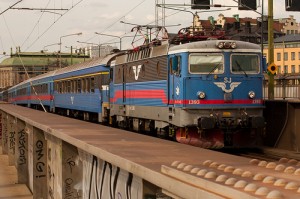
By rail you go via Gothenburg, changing there, and the whole thing takes most of a day. Copenhagen to Gothenburg is three and a half to four hours and Gothenburg to Oslo is around four.
From 15 June 2026 this got easier: Snälltåget runs daily between Malmö and Oslo via Gothenburg, which cuts out a change and adds competition on the fare. SJ covers the Swedish legs otherwise.
Carry your passport. Sweden has checked identity documents on the Öresund crossing since 2016, and you will be crossing two borders on this trip.
Flying
An hour and ten, and on a route where the surface alternatives are a full day or a night at sea, flying is the sensible default if you are short on time. Copenhagen and Oslo are both well served and the fares are usually reasonable.
Check which Oslo airport you are being sold. Gardermoen is the main one and has a fast train into the city. Torp and Rygge are considerably further out, and the transfer can eat the saving whole.
Buses and driving
Coaches do it in around eight hours via Gothenburg and cost less than anything else. FlixBus runs them.
Driving is roughly 600 km, seven hours or so, and involves the Öresund Bridge toll and Norwegian road tolls, which are automatic and will find you afterwards through the hire company. Norway is also expensive to drive in once you arrive. The ferry takes cars, which is the neat solution if you have one.
Frederikshavn, and why the ship stops there
The overnight ferry calls at Frederikshavn on the northern tip of Jutland, which is a useful thing to know rather than an inconvenience. You can join or leave the ship there, which opens up a route through Denmark that does not involve Copenhagen at all, and Skagen, where the North Sea and the Baltic meet in visible lines of surf, is 40 minutes further north by train.
Which to choose
Three ways to do this trip and they suit three different travellers.
Fly if the destination is the point and the journey is overhead. An hour and ten, and done.
Take the ferry if you have an evening to spare, want a bed at the end of it and like the idea of arriving up a fjord. It is the only one of the three that is an experience rather than a transfer.
Take the train if you want to see Sweden on the way and stop in Gothenburg, which is worth a day in its own right.
What is hard to recommend is the coach, unless the fare difference is doing real work for your budget. Eight hours sitting up, on a route where a cabin on a ship costs not much more.
Money
Three countries, three currencies, none of them the euro. Denmark uses the krone, Sweden the krona and Norway its own krone, and they are not interchangeable despite the shared name. Cards work everywhere, and Norway in particular is close to cashless, so there is little reason to carry notes in any of them.