Getting from Faro to Lagos
· Updated · BootsnAll
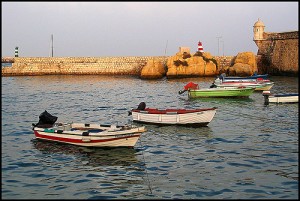 Faro is the Algarve's capital and the site of its airport, which means almost everyone arriving in southern Portugal passes through it. Lagos is 80 km west, a walled town with a harbour, and it is where a lot of those people are actually going.
The two are joined by the Algarve's railway line, which runs the length of the coast and is one of the more useful regional railways in Portugal.
The train
Regional trains take about an hour and three quarters, with several departures a day. It is cheap, it is straightforward, and it stops at most of the coastal towns on the way: Albufeira, Portimão, Silves.
Two practical notes. Faro's railway station is in town, not at the airport, so from the airport you need the bus or a taxi first, about fifteen minutes. And several Algarve stations are some distance from the towns they name: the station for Albufeira is a few kilometres inland, and Portimão's is a walk from the centre.
Check where the station actually is relative to where you are staying before assuming the train is door to door.
Buses
Buses take a little over an hour and a half, and unlike the train they run directly from Faro airport to Lagos, which for most arriving travellers makes them the better choice.
They also go to the town centres rather than to stations on the edge. On this corridor the bus is the more useful mode, which is not something we say often.
Driving
About an hour on the A22, the Via do Infante, which runs the length of the Algarve parallel to the coast.
One warning that catches almost every visitor. The A22 is electronically tolled with no toll booths at all. You cannot pay cash. Hire cars need a transponder or a registered card, and if you drive it without arranging that you will receive a bill later, usually with an administration fee from the rental company that dwarfs the toll.
Sort this out at the rental desk. The alternative is the N125, the old road, which is free, slower and passes through the towns.
Which end to stay at
Worth thinking about, because they are genuinely different.
Lagos has the dramatic coast: the sea caves and stacks at Ponta da Piedade, the beaches under cliffs at Dona Ana and Camilo, and boat trips out to the grottoes. It is also lively and gets a young crowd in summer.
Faro is quieter and more Portuguese, and its draw is the Ria Formosa, a lagoon and barrier island system that is a nature reserve. The islands off Faro have long empty beaches and are reached by ferry.
West of Lagos the coast turns wild: Sagres and Cape St Vincent, the south western corner of Europe, where Atlantic swell comes in properly and the tourist development stops.