Getting from Dubrovnik to Korcula
· Updated · BootsnAll
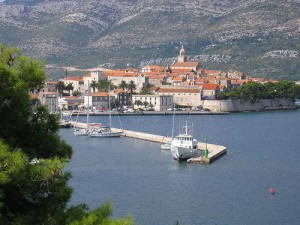 Korcula town is a walled Venetian settlement on a small peninsula, laid out in a herringbone pattern so the streets catch the summer breeze and block the winter wind, which is the sort of detail that makes it worth the trip. The island claims Marco Polo as a son, on evidence that is thin and enthusiastically maintained.
It is about 100 km up the coast from Dubrovnik and it is one of the easier island trips in Dalmatia.
The catamaran
In season, fast passenger catamarans run Dubrovnik to Korcula town in around two hours, sometimes less. Jadrolinija and private operators such as Kapetan Luka both work the route, often continuing to Hvar and Split.
This is the obvious choice. It lands you in the old town itself rather than at a ferry port elsewhere on the island.
These are seasonal services, running roughly late spring to early autumn with the fullest timetable in July and August. Book ahead in high summer. They take foot passengers only.
By road and short ferry
You can also go by land, and this has become much easier.
Take a bus from Dubrovnik up the coast and onto the Pelješac peninsula to Orebic, then the short ferry across to Korcula, which takes about fifteen minutes and runs frequently. Total journey around three hours depending on the connection.
The reason this is easier than it was: the Pelješac Bridge opened in July 2022 and connects the peninsula to the mainland directly, so the road no longer passes through the Bosnian coastal strip at Neum and there are no border crossings.
The Orebic ferry lands at Domince, a couple of kilometres from Korcula town, with a bus meeting the boat.
Making a route of it
The better plan is not to treat this as a return trip from Dubrovnik. Korcula sits neatly on the island chain, so you can run Dubrovnik to Korcula to Hvar to Split by boat and never double back.
If you are driving, the Pelješac peninsula itself deserves a day. It produces some of Croatia's best red wine, from the Plavac Mali grape, and the vineyards at Dingac are planted on slopes so steep they were worked with donkeys until recently. Ston, at the neck of the peninsula, has the longest defensive walls in Europe after the Great Wall and has been producing salt in the same pans since Roman times.
On the island
Korcula town takes half a day. The rest of the island takes longer and is quieter: Lumbarda has the sandy beaches and a white wine, Grk, grown nowhere else, and the eastern end is largely forest.
The Moreska sword dance, performed in the town in summer, is a genuine survival rather than a tourist production, though it is now staged for visitors.
Croatia has used the euro since 1 January 2023. Kuna prices you find online are out of date.