
Getting from Stockholm to Helsinki
· Updated · BootsnAll
 There is no road or railway between Stockholm and Helsinki. The Gulf of Bothnia is in the way, and going round the top of it through Lapland is a two day expedition rather than a journey. So this is a choice between flying over the Baltic and sailing across it, and unusually, the slow option is the one most people should take.
The overnight ferry
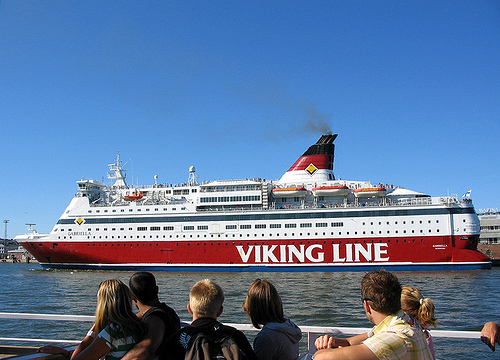
This is the main event. Viking Line and Tallink Silja both run big overnight ships between Stockholm and Helsinki, threading out through the Stockholm archipelago in the evening, calling in the Åland Islands overnight and arriving in Helsinki in the morning. The crossing takes around sixteen to seventeen hours.
Two things make this worth doing rather than enduring. The ships are properly large, with cabins, restaurants and more entertainment than you will want. And the first two hours out of Stockholm, winding between thousands of low wooded islands with summer houses on them, is one of the best views in northern Europe and costs you nothing extra.
The Åland stop is not a sightseeing detour. Åland is an autonomous Finnish province outside the EU VAT area, and calling there is what lets the ships sell duty free, which is what keeps the fares low. A cabin crossing can cost less than a hotel room in either city, and you save the hotel night on top.
Book a cabin rather than a deck ticket unless you have a very high tolerance for a long night. The cheapest inside cabins are windowless and perfectly fine.
Flying
An hour in the air, and several airlines a day between Arlanda and Helsinki-Vantaa. If you are on a tight schedule this is the obvious answer, and Helsinki-Vantaa has a good rail link into the city.
But look at what you get for the extra time on the ferry: an evening, a night's sleep, a morning arrival in the middle of the city, and no airport at either end. For an overnight journey the ship is not the compromise. It is the better product.
Going overland, if you insist
It can be done. You take the train north through Sweden to Boden and on to Haparanda at the Finnish border, cross to Tornio, and then head south through Finland to Helsinki. It takes the better part of two days with changes, and costs more than the ferry.
The only reason to do this is if you actually want to see the top of the Gulf of Bothnia in winter, which is a real reason, just not a transport one.
Buses and cars
There is no direct coach for the same reason there is no train. Some combined bus and ferry tickets exist and price similarly to the ferry alone.
If you are driving, the ferries take cars, and that is the whole answer.
Which line to pick
Viking Line and Tallink Silja run much the same crossing on much the same schedule, and choosing between them is mostly a matter of taste.
Viking Line has the louder reputation and a younger crowd, particularly at weekends, when a proportion of the passengers are not going to Helsinki at all and are aboard for the duty free and the entertainment. Tallink Silja skews a little quieter and more family oriented. Neither is a monastery. If you want to sleep, book a cabin away from the nightclub deck and note which end of the ship it is at.
Both terminals in Stockholm are reachable on public transport, though they are not next to each other, so check which one your ship leaves from before you set out. Getting that wrong is the classic mistake on this route.
Winter crossings
The ferries run all year. In a hard winter the northern Baltic freezes, and the ships are built for it: they go through the ice with icebreaker assistance where needed, and watching a ship break a channel through sea ice at dawn is worth being awake for.
The archipelago in winter, under snow with the sea frozen between the islands, is a completely different sight from the summer version and far fewer people see it.
Åland, if you want to stop
You can break the journey at Mariehamn rather than sleeping through it. Åland is Swedish-speaking, autonomous, demilitarised and flat enough that the whole archipelago is best seen by bicycle. Ships from both companies call there daily in each direction, so stopping costs you a day rather than a fortune.
Very few people travelling between the two capitals do this. That is most of its appeal.