3 Days in Buenos Aires: Itinerary Ideas
· Updated · BootsnAll
 Buenos Aires is a European city that ended up in South America, built by Italians and Spaniards with French architecture and no money left over for maintenance, which is a large part of its charm. Three days gets you the shape of it.
The city is organised into barrios with strong characters, so the sensible way to plan is one or two barrios a day rather than a list of sights scattered across it.
Day one: the centre and San Telmo
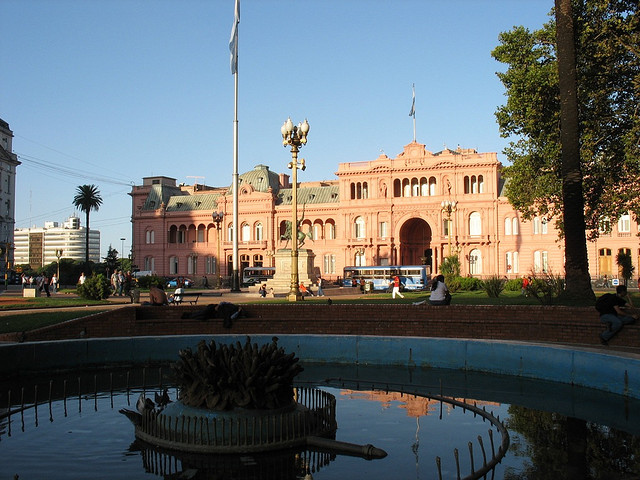
Start at Plaza de Mayo with the Casa Rosada, the pink presidential palace with the balcony everyone knows from Evita. The Mothers of the Plaza de Mayo have marched here every Thursday since 1977, and they still do.
Walk down Avenida de Mayo, which was built to look like Madrid, to the Café Tortoni, open since 1858 and now more queue than café. Then south into San Telmo, the oldest barrio: cobbles, antique shops and the covered market.
If you are here on a Sunday, the San Telmo fair takes over Calle Defensa for a kilometre or more and is one of the best street markets in South America.
In the evening, tango. Choose deliberately: a big dinner show is a production for visitors, while a milonga is where people actually dance and will let you watch. La Catedral and Salón Canning are the names to look for.
Day two: Recoleta and Palermo
Recoleta cemetery in the morning. It is a city of marble mausoleums, several storeys of the Argentine aristocracy buried above ground in streets you walk down, and Eva Perón is in it, in a vault with a queue outside. Go early.
The Museo Nacional de Bellas Artes is nearby and free.
Then Palermo, which is enormous and subdivided: Palermo Soho for the bars and boutiques, Palermo Hollywood for restaurants, and the parks, rose garden and Japanese garden for the afternoon.
Eat late. Buenos Aires restaurants fill from nine and a booking at eight marks you out.
Day three: La Boca, or get out on the water
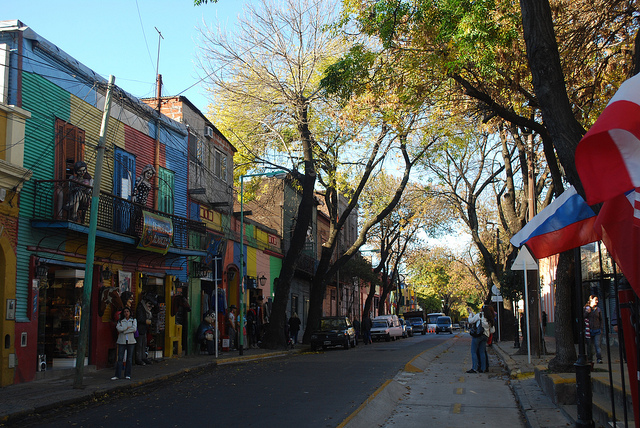
La Boca is the port barrio with the painted corrugated houses on Caminito, and the Boca Juniors stadium. Be clear-eyed about it: Caminito is two streets of colour surrounded by a neighbourhood with real poverty, and the standard advice not to wander outside the tourist stretch is given for a reason.
The better third day, if the weather is good, is Tigre: an hour by train from Retiro up to the Paraná delta, where you swap the city for a maze of channels, stilt houses and boats. Take the Tren de la Costa if you want the scenic version.
Money, which has changed completely
Forget everything you have read about bringing cash dollars and finding a cueva. Argentina lifted its currency controls in April 2025 and the gap between the official and parallel rates has collapsed to under two percent.
Use your card. Foreign cards get the MEP rate. When a terminal asks whether you want to pay in pesos or your home currency, choose pesos.
Getting around
Get a SUBE card at a station or kiosk. It covers the subte, buses and trains, and buses will not take cash.
The subte is quick and limited; the bus network is vast and goes everywhere. Taxis and apps are cheap by international standards.